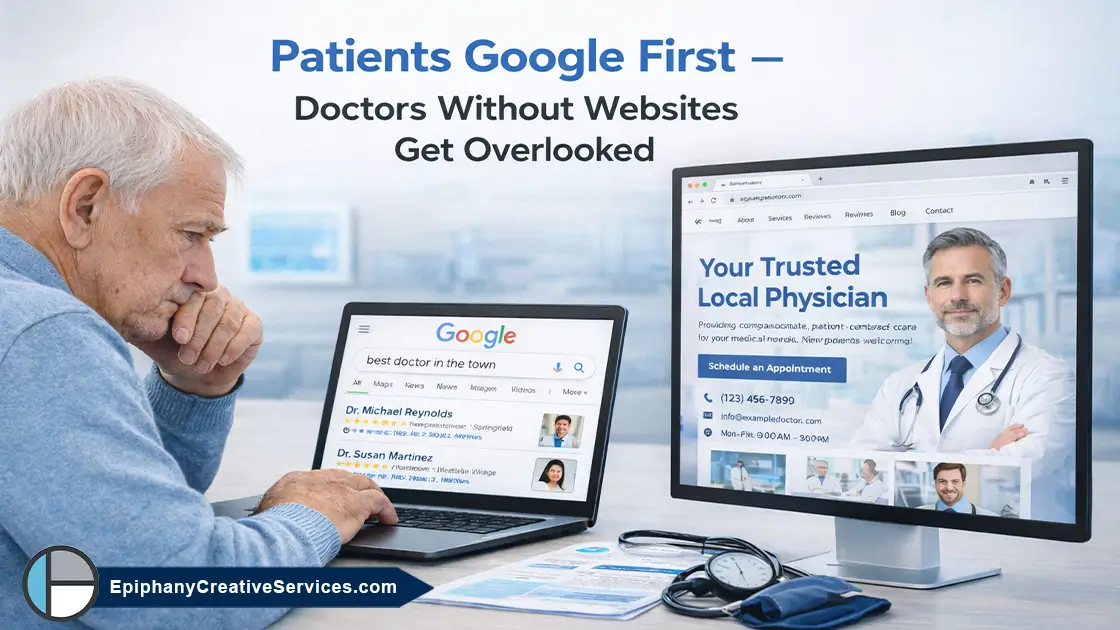

Patients Google First – Doctors Without Websites Get Overlooked
In 2026, the digital landscape continues to shape how people live, shop, and — importantly for you — choose healthcare providers. If you’re a doctor without a professional website, you’re missing out on new patients, credibility, and opportunities to grow your practice in a highly competitive environment.
Let’s explain why a website isn’t just useful anymore — it’s essential.
1. Patients Search Online Before Booking Appointments
Across the world, people turn to search engines like Google as their first step when choosing a healthcare provider. Research shows that up to 77% of patients research doctors online before making an appointment.
When a patient searches for a specialist, clinic hours, or treatment information, they expect to find a well-organized website with clear details. Without one, your practice may never appear in those search results — and another doctor will fill that space.
Key Benefit: Visibility where patients are already searching.
2. A Website Builds Trust and Professional Credibility
Healthcare is built on trust. A professional website lets you showcase:
- Your education and qualifications
- Areas of specialization
- Treatment philosophy
- Testimonials from real patients
According to studies, patients perceive doctors with complete and informative websites as more trustworthy and professional.
Without a website, patients rely on third-party review sites and online directories that may offer incomplete or inaccurate information about your practice.
Key Benefit: A website strengthens your professional reputation.
3. Your Practice Is Accessible 24/7
A website works for you around the clock. It gives patients access to important information even when your office is closed. This includes:
- Contact info and clinic hours
- Directions and parking details
- Online booking or appointment request forms
- Answers to common patient questions
Modern patients appreciate the convenience of getting information instantly, without needing to make a phone call.
Key Benefit: Improved patient experience and convenience.
4. Websites Improve Search Engine Visibility
Search engine optimization (SEO) ensures your practice appears when people search for local healthcare providers. Doctors with well-structured, SEO-optimized websites are more likely to appear at the top of Google results, bringing more organic traffic without costly ongoing advertising.
Relying solely on social media or directory listings is not enough — those platforms are controlled by third parties, and may not rank as highly in search results.
Key Benefit: Higher online visibility and more patient leads.
5. Educational Content Engages Patients and Boosts SEO
Websites also serve as platforms for sharing valuable health information. Publishing blogs, FAQs, and educational resources:
- Helps patients make informed decisions
- Positions you as a thought leader in your field
- Improves your search rankings by adding valuable content
Patients are more likely to trust and engage with practices that offer clear, helpful information online.
Key Benefit: Patient engagement + stronger search performance.
6. Mobile Accessibility Is Critical
Globally, a large majority of internet users access the web through mobile devices — including when searching for local services and doctors. A mobile-friendly website ensures your practice information is easily accessible on phones and tablets.
Without mobile optimization, potential patients may leave your site and choose a competitor instead.
Key Benefit: Reach patients wherever they are — on any device.
7. A Website Gives You Control Over Your Online Presence
Your website is your digital identity. Unlike social media or review platforms, which are controlled by others, your site allows you to:
- Share accurate, up-to-date information
- Present your services in your own words
- Address patient concerns directly
- Highlight your practice values
This level of control helps you manage how your brand is perceived online.
Key Benefit: A professional digital presence you fully control.
8. Websites Support Telemedicine and Patient Interaction
Telemedicine has become a permanent part of healthcare delivery in many regions. A website can integrate telehealth booking systems, patient portals, or links to virtual consultations, helping you meet patient expectations for convenience and digital access.
Key Benefit: Expand your reach through digital patient care.
Final Thoughts: Your Website Is an Investment — Not an Expense
If you don’t yet have a website, now is the time to build one. A website boosts visibility, credibility, patient engagement, and growth, all while strengthening your competitive position in the digital age.
At Epiphany Creative Services, we specialize in creating professional, high-performing websites for doctors and healthcare professionals worldwide. From custom design to SEO optimization and mobile responsiveness, we build sites that work as hard as you do.
💡 Ready to grow your practice and reach more patients online?
Contact us today — let’s build your digital presence together.